If you have transcribed or annotated a manuscript (maybe using Nyingarn) how can you present your enriched version of the text and the original manuscript images so that others can benefit? And how can you do this in a way that does not add too much to your ordinary work?
A typical way of doing this uses the Text Encoding Initiative’s (TEI) XML encoding, as seen in the Digital Daisy Bates project (https://bates.org.au/), that put online thousands of pages of manuscripts written in 1904 representing wordlists in a number of Australian Indigenous languages. This project encoded the vocabularies in TEI XML and the pipeline from source files to online version was written by Conal Tuohy. Any edits to the site have to be compiled by a command-line routine that rebuilds the site. I am unable to fix the routine if errors occur and I depend on others for troubleshooting. As the TEI has been around for a long time, I assumed there would be established platforms for displaying TEI texts. I investigated several existing TEI platforms for presenting the Bates images and text, but they could not display two page images with text as is required in this project. I was also disconcerted to find these platforms (not named for obvious reasons) were unreliable, and often had a single developer who was not always available to support them. When tested, their sites were often down, leading to my preference to create this site with simpler technology that has fewer dependencies.
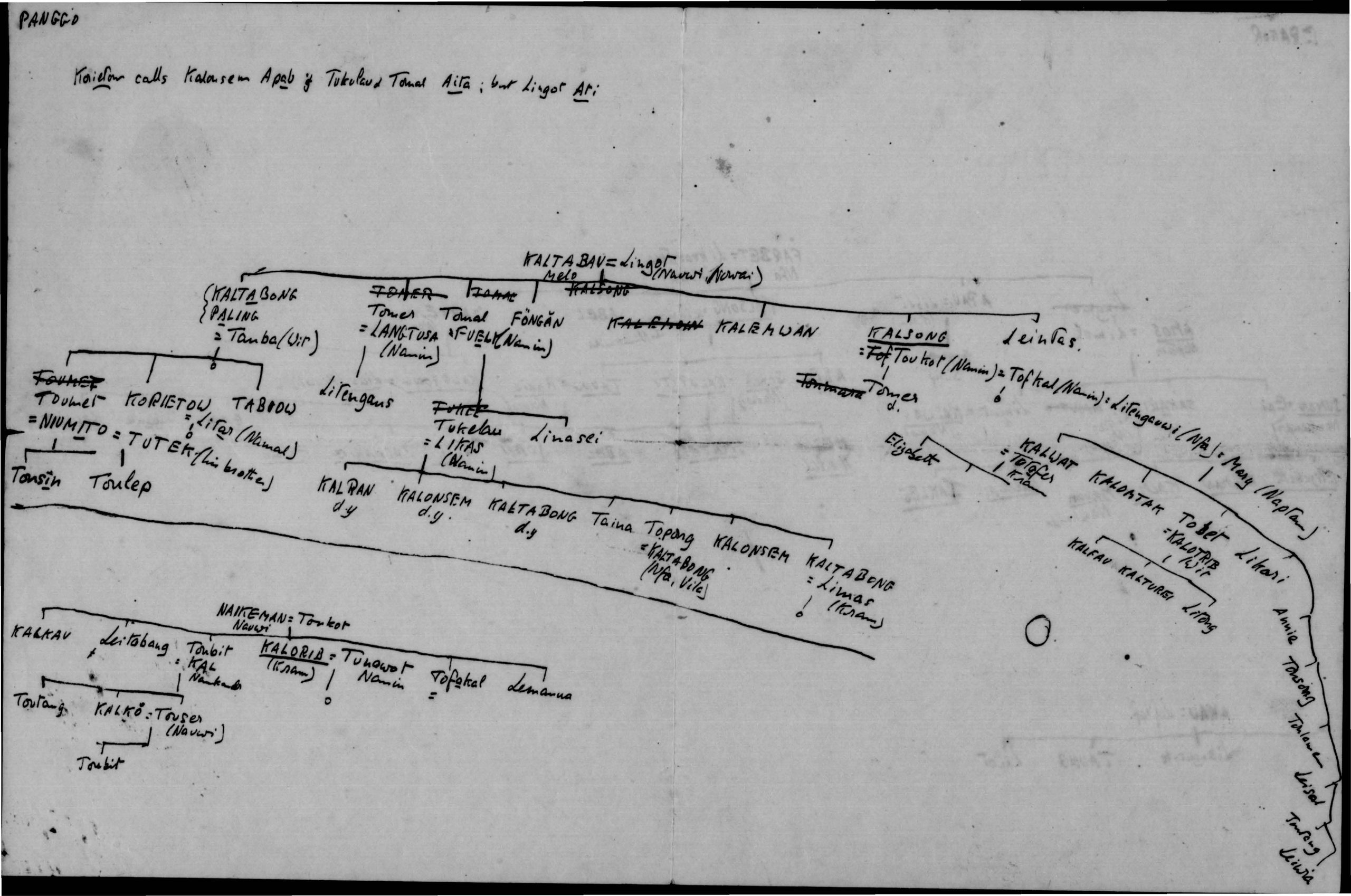
I decided to use HTML to create an edition of a manuscript that exists otherwise only as a set of notes, available on microfilm from the Tuzin Archive for Melanesian Anthropology at the University of California, San Diego.
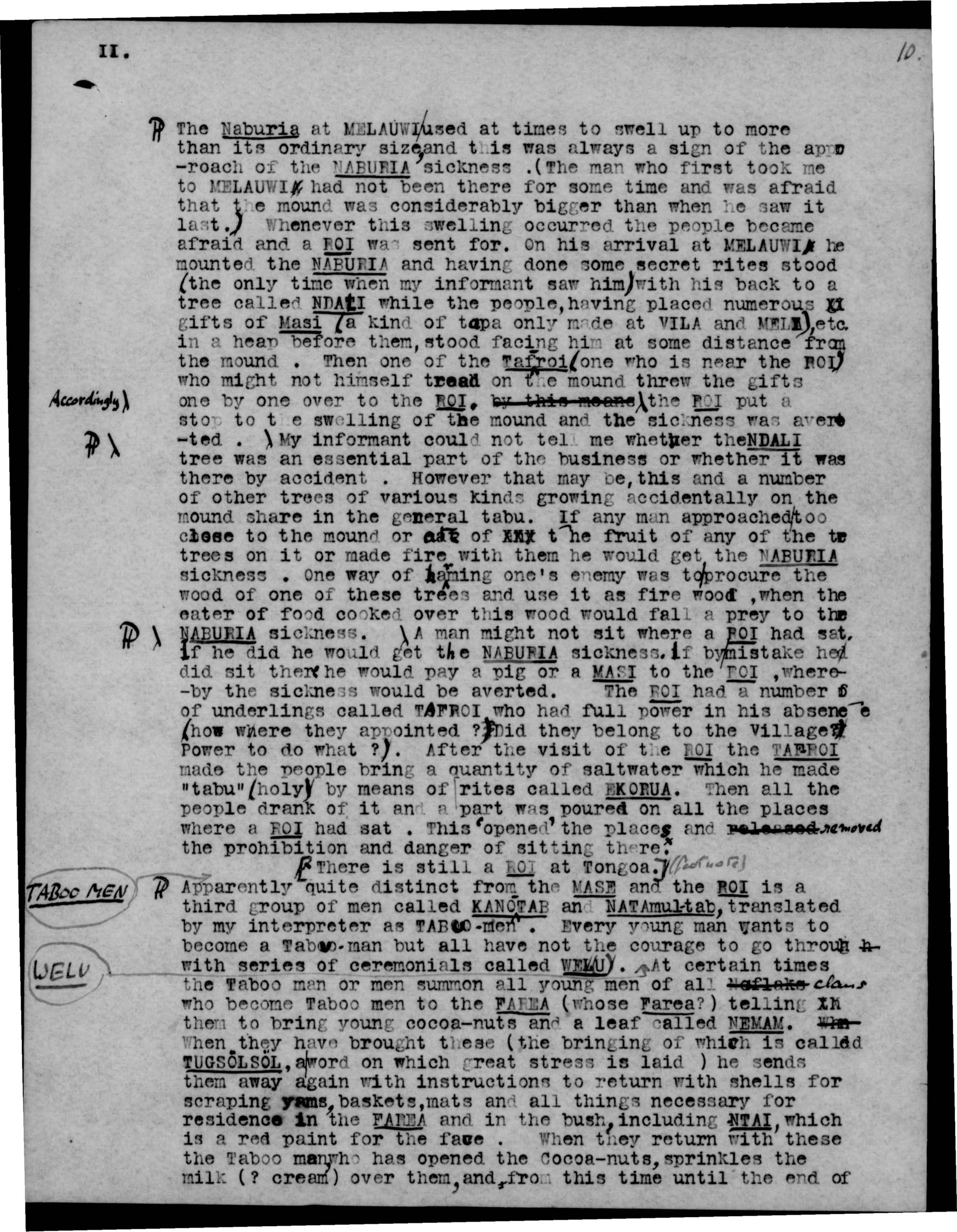
It comprises some 8,000 words of ethnographic material written by the anthropologist John Layard in Efate, Vanuatu in 1914.
There are multiple versions of the same text, first as handwritten notes, then the author typed his handwritten notes several times, and each was annotated. Despite being available on microfilm for some time, once digitised and reworked as described here, it is now a more coherent and readable document.
Layard’s notes include information on clan affiliations and family trees, and it records some customary information that was already being suppressed by the missionary effort.
I combined these versions of the manuscript to make a single diplomatic edition that allows a reader to follow the content in a way that was not possible with the original documents. Where the notes include genealogies (as seen above), I entered them into genealogical software to produce family trees, included on the site as images, with the text of the names included on the page to allow searching.
This document is important as little else was recorded of traditional cultural information in Efate at the time. Missionary work had begun in the then New Hebrides in the mid-1800s, and most of the population of Efate had converted to Christianity by the early 1900s.
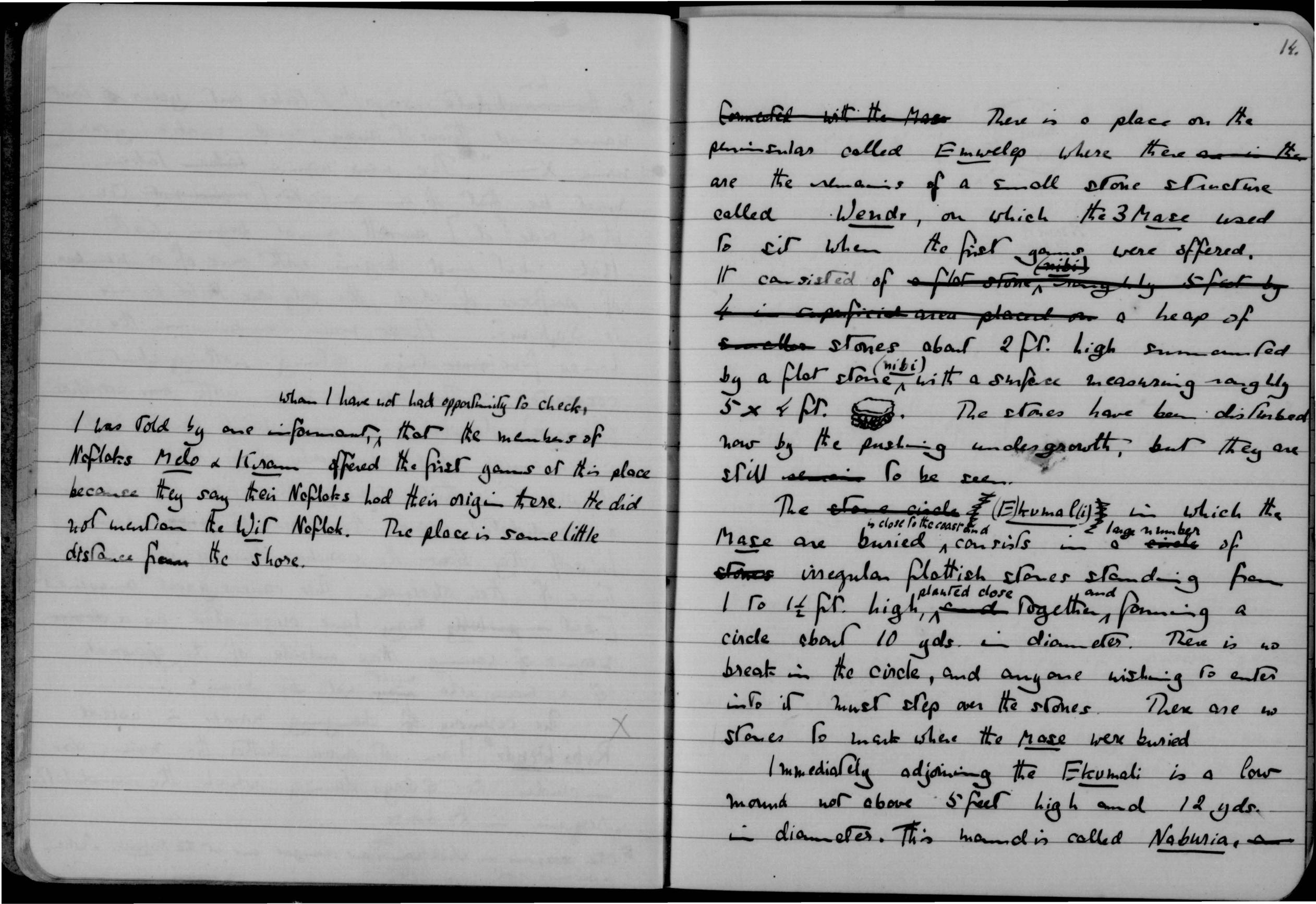
In order to allow readers to see the original pages and to make their own judgements about any text that I found difficult to read, links to relevant images were included for each page in the online version (https://rebrand.ly/LayardEfate). The main technical requirements are access to a server and a domain (both of which would also be needed if had used the TEI), sftp access, and knowledge of editing HTML.

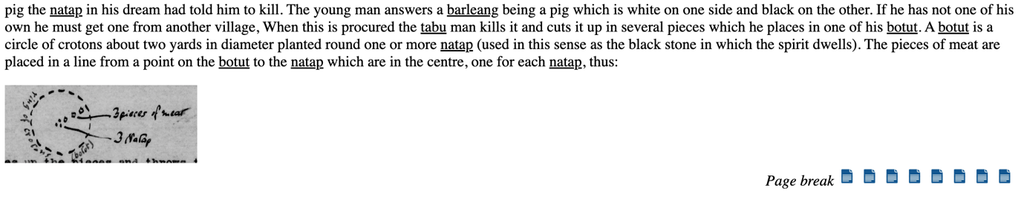
The HTML version (https://rebrand.ly/LayardEfate) presents the text and images of the manuscript originals, sometimes up to eleven different page images corresponding to the same text accessed via small icons at the head of each page (see Figure 1). It is housed on a site controlled by me, not my university, and is copied by the Internet Archive, as it is a simple HTML page. The Bates pages are not properly presented in the Internet Archive as they are dynamically generated. The Layard page requires no maintenance and has no dependencies, and I was able to build the site myself. The code to add links to the images (shown in Figure 1) is shown in Figure 2. Where Layard included images in his notes I have added them as inline images on the page, as seen in Figure 3.
<a href=”images/mss84_b051_f001004.jpg” target=”_blank”><img src=”pageimage.jpg” alt=”” =”20″></a>
<a href=”images/mss84_b051_f001035.jpg” target=”_blank”><img src=”pageimage.jpg” alt=”” width=”20″></a>
<a href=”images/mss84_b051_f001051.jpg” target=”_blank”><img src=”pageimage.jpg” alt=”” width=”20″></a>
</div>
<div style=”text-align:center;”><p><b>Notes on the village of PANGO in the island of Efate in the New Hebrides
</b></p></div>Figure 2 Sample HTML code used to link page images
While HTML lacks the ability to encode the rich structural detail that the TEI does, if the aim is to make the content of the manuscript readable and searchable online then HTML works well, especially for a small document like this one. Validation of HTML is not as exacting as of TEI XML, but can still be carried out, for example using https://validator.w3.org/.
Significantly, making this document legible has been crucial in solving a mystery posed by recent archaeological work that revealed the presence of at least 70 circular forms in the Efate landscape, varying in size up to 80 metres across. No one we talked to today had any recollection of what these circular forms were, but the Layard edition includes a description of a circular dancing ground and an image as can be seen in Figure 4. Since these documents were previously largely inaccessible, this edition has now allowed the mystery to be solved.
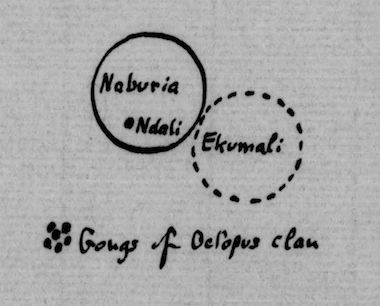
Figure 4. Drawing of the Naburia and Ekumali circular forms (Click to see the site)
The original microfilm of these notes was available in Vanuatu, but, with no functioning microfilm reader there, was not accessible. Even if the microfilm were legible there, the number of versions of the content was confusing to any potential reader. The present document has been rendered as a pdf for local viewing and a printed version is lodged with the Vanuatu National Library.
In conclusion, while the TEI is the technology of choice for work on complex documents such as illuminated mansucripts that are richly annotated, it is not necessarily the best approach for simpler editions like the one described here.
References
These papers are held at the Tuzin Archive for Melanesian Anthropology at the University of California at San Diego, who kindly gave me digital copies of microfilmed versions of the documents. They are part of the John Willoughby Layard Papers, 1897 – 1974 (MSS 84): Notes re: villages of Pango, Oba, Vila and Eretap, [reel 38, frame 0101] Box 51 Folder 1-3. also https://library.ucsd.edu/speccoll/findingaids/mss0084.html
Thieberger, Nick (ed.), 2021. John Willoughby Layard Notes re villages of Pango, Vila and Eretap. Online resource: https://rebrand.ly/LayardEfate.
I’m grateful to the Tuzin Archive and to John Layard’s son, Richard Layard, for permission to produce this manuscript.
 Follow
Here at Endangered Languages and Cultures, we fully welcome your opinion, questions and comments on any post, and all posts will have an active comments form. However if you have never commented before, your comment may take some time before it is approved. Subsequent comments from you should appear immediately.
We will not edit any comments unless asked to, or unless there have been html coding errors, broken links, or formatting errors. We still reserve the right to censor any comment that the administrators deem to be unnecessarily derogatory or offensive, libellous or unhelpful, and we have an active spam filter that may reject your comment if it contains too many links or otherwise fits the description of spam. If this happens erroneously, email the author of the post and let them know. And note that given the huge amount of spam that all WordPress blogs receive on a daily basis (hundreds) it is not possible to sift through them all and find the ham.
In addition to the above, we ask that you please observe the Gricean maxims:*Be relevant: That is, stay reasonably on topic.
*Be truthful: This goes without saying; don’t give us any nonsense.
*Be concise: Say as much as you need to without being unnecessarily long-winded.
*Be perspicuous: This last one needs no explanation.
We permit comments and trackbacks on our articles. Anyone may comment. Comments are subject to moderation, filtering, spell checking, editing, and removal without cause or justification.
All comments are reviewed by comment spamming software and by the site administrators and may be removed without cause at any time. All information provided is volunteered by you. Any website address provided in the URL will be linked to from your name, if you wish to include such information. We do not collect and save information provided when commenting such as email address and will not use this information except where indicated. This site and its representatives will not be held responsible for errors in any comment submissions.
Again, we repeat: We reserve all rights of refusal and deletion of any and all comments and trackbacks.