PARADISEC activity update

During September we negotiated with the Vanuatu Cultural Centre to assist in digitising their reel-to-reel tape collection. We now have 70 of their tapes in the queue, representing work done in Malakula and in Efate since the 1960s.

Zygmunt Frajzyngier deposited his collection of various African language recordings and they will be accessioned in the near future.

Hidden treasure in the collection

In this item, Tom Dutton is talking with Ken Pike who first coined the notion of ‘etic’ and ’emic’ analysis and who was the first President of the Summer Institute of Linguistics (SIL). This recording was made in 1962 about working with Australian languages. You can hear it here (once you are signed in to the catalog).

Read more

A fruitful day in Copenhagen

No one likes the term ‘entomophogy’, and perhaps even fewer people know what it means. The title of the journal ‘Insects as food & feed’ is a deliberate move away from it, but even the term ‘edible insect’ is not unproblematic. According to GREEiNSECT researcher Afton Halloran, in many cultures the question ‘Do you eat insects?’ can get a negative response, whereas asking about a particularly species more often yields ‘yes’. Some Kaytetye speakers prefer the word ‘witchetty’ to ‘grub’; coining terms such as ‘whitewood witchetty’ and ‘river red gum witchetty’ as translations of the various edible larvae, a semantic extension also found in Kaytetye.

The pejorative overtones of English ‘grub’ and ‘insect’ reflects a preference in English to use a culinary name for animals as food. Consider ‘meat/animal’, ‘venison/deer’ etc. When the Kangaroo Industry sought a culinary term for skippy, they may have done better had they adopted marlu (Warlpiri) instead of the neologism ‘australus’. For ‘edible insects’ a similarly palatable set of sounds for English speakers might be tjapa (Western Arrarnta).

Read more

Fieldwork in multilingual communities: A LIPIL discussion

Lauren Gawne recaps last week’s Linguistics in the Pub in London (LIPIL), a monthly informal gathering of linguists to discuss topical areas in our field.

Our first LIPIL was well attended, with participants from the African Multilingualism conference and ELDP training joining London locals. In keeping with the theme of the conference, we discussed language documentation in multilingual contexts. The conversation involved a number of researchers who focus on documenting language use in multilingual communities. Members of the Crossroads project at SOAS and Pierpaolo Di Carlo from SUNY Buffalo shared their experiences in an African context, and Ruth Singer from Melbourne University shared her experience in Australia.

Many of those present at LIPIL who now work with multilingualism started out documenting a particular variety of a language of the area, often the ‘ancestral code’. The move to thinking about multiple languages often came about in an attempt to better capture the daily communicative realities of individuals. This is a major research transition if the attempt is to be done well.

Read more

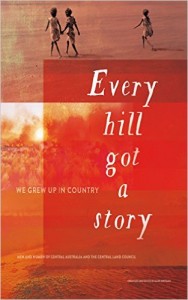
Every hill got a story oral history just out

Every hill got a story: we grew up in country w51TVk4uaX0L._SX311_BO1,204,203,200_as launched this afternoon at Alice Springs Telegraph Station. A companion multimedia site is hosted by SBS Books. The substantial volume is sold by SBS Books and is also available on Kindle.

The volume by ‘men and women of central Australia and the Central Land Council’ is compiled and edited by Marg Bowman, carrying on from the late Jane Hodson, long term anchor of the CLC media section.

Read more

Introducing LIPIL: Linguistics in the Pub in London

Linguistics in the Pub (LIP) expands beyond Australia, with Linguistics in the Pub in London (LIPIL). Our first LIPIL will be:

Fieldwork in multilingual communities (Guest participant Dr. Ruth Singer)

Date:             Monday 7th September 2015
Time:             6:00 – 8:00 pm
Venue:           Upstairs room, The Lamb (94 Lambs Conduit Street, Bloomsbury, London, WC1N 3LZ)
Food and drinks available at the venue.

Contact Lauren Gawne with any questions: lg21@soas.ac.uk
You can receive future LIPIL announcements by signing up to the RNLD mailing list: http://www.rnld.org/node/5

UPDATE: We now have a LIPIL Facebook page for updates, and you can RSVP

Read more

Orana : how did naming books welcome a Polynesian word as Australian?

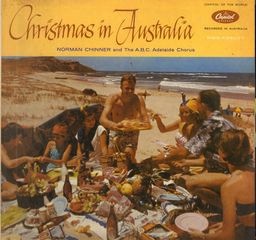
LP cover
http://www.musicstack.com/item/74418194

Many of us who remember the 1960s in Australia know the chorus ‘Orana! Orana! Orana to Christmas Day’ (listen via iTunes, track 13) in one of the popular Australianised seasonal songs of the period. The lyricist, ABC staff writer John Wheeler (fl. 1940–70, with composer William Garnet ‘Billy’ James 1892–1977), likely found the word Orana in one of the notorious naming booklets: Orana ‘welcome’ has been listed in many of them as an Aboriginal word of NSW, beginning with Thorpe (1921:5) (and see table below). Update: ‘Carol of the birds’ was in the first set of Five Australian Christmas carols, released for Christmas 1948 (Catholic Weekly 23 Dec 1948, page 2, Magazine Section), which implies Wheeler’s source was one of the Thorpe or Tyrrell booklets published before WWII.

In the 1970s Orana got another boost in New South Wales, from official naming:

Read more

PARADISEC activity update

It has been a busy time for Paradisec over the last couple of months.  We now have more than 5,100 hours of recorded material in the catalog and in 2 months alone have added 250GB of data, all of it representing digitised versions of analog tapes.

Recent work on the collection of 200 tapes from the Solomon Islands Museum is nearing completion but, as some tapes have required careful conservation work before being playable, the project has taken longer than expected. The collection was in urgent need of digitisation, not only because of the condition of the tapes, but also because little is known about the contents of the tapes. At least some contain material in Ririo – a language that has only a very small number of living speakers. The availability of digital files will allow the Museum to identify the contents of the recordings. We have also just finished digitising Nancy Carter’s 1960s recordings from the Solomon Islands and Bougainville that came to us two years ago. These three inch tapes were initially unplayable and needed special attention. They are now available online.

Read more

MLIP recap July 2015: Language in education in multilingual contexts: beyond ‘mother tongue’ education

A recap of last night’s Melbourne Linguistics in the Pub, by Kellen Parker van Dam (La Trobe University).

The topic of MLIP was ‘Language in education in multilingual contexts: beyond ‘mother tongue’ education’ and the discussion was led by Felix Ameka (Leiden University).

Topic and description as posed by Felix Ameka in the original MLIP announcement:

Linguists promote the benefits of “mother-tongue” education, especially in the first years of primary education. Linguistic human rights advocates argue that if a child is not taught in their first language, then the child’s basic linguistic human rights are violated (e.g. Babaci-Wilhite 2014). However the notion of the ‘mother tongue’ is inappropriate in highly multilingual contexts (see e.g. Lüpke and Storch 2013). In these contexts, children can be disadvantaged by ‘mother tongue’ policies in education that favour the use of a single standardised language in education. I will discuss the case of Ewe-speaking children in Sokode, Ghana who use a colloquial Central Ewe variety at home and struggle with the standard Ewe used in the school. I advocate a multi-lectal, multilingual, multi-modal approach to language in education that eschews an opposition between so called exoglossic national languages and local indigenous languages.

Read more

Songs of the Empty Place

Jimmy Weiner and Don Niles have published Songs of the Empty Place: The Memorial Poetry of the Foi of the Southern Highlands Province of Papua New Guinea. This new book contains songs recorded by Weiner between 1979 and 1995 and can be downloaded from ANU E-Press here. All audio was digitised by PARADISEC and is available in the collection JW1. The songs are organised under three main categories: 7 Women’s Sago Songs (Obedobora), 44 Men’s Songs (Sorohabora), and 7 Women’s Songs (Sorohabora) and accompanied by some 40 photographs.

Read more

Tongue twisters in Australian languages

A lively thread has been unwinding over on the RNLD email list recently, in response to a request for examples of Australian tongue twisters.

So many great phrases have come out of the woodwork that it behooves us to set them down here for posterity. Thanks to John Hobson for starting the discussion, and to all those who contributed examples.

It’s interesting that quite a few of these seem to be about drilling the word-initial velar nasal [ŋ-], one of the perenniel challenges for mother-tongue speakers of English but less ‘twisty’ for speakers of Australian Aboriginal languages, or indeed for anyone who lives in the vicinity of these red dots.

Arrernte

Intelyapelyape yepeyepe-kenhe lyepelyepele anepaneme
‘The butterfly is sitting on the sheep’s intestines’

(thanks: Jenny Green)

Read more